Targeted to Intermediate English (B1+) speakers.Read more
This is the standard requirement for most courses. Participants at this level can participate actively in discussions and manage everyday and professional situations. If they are unsure about their English level, they can test it here or explore our courses facilitated in Basic English.
Secondary Teachers.Read more
The listed audiences are those for whom the course is especially recommended, but courses are not exclusive to them and are open to everyone. In fact, most of our workshops are built around the collective sharing of participants’ experiences and having a variety of profiles enriches the learning process and is highly encouraged!
Description
In modern secondary classrooms, teachers and educators are always looking to make learning more inclusive, participatory, and relevant to their students, often trying to connect it to real-life experiences.
In that sense, there’s a growing need for teaching approaches capable of going beyond content delivery, fostering dialogue, reflection, and active engagement.
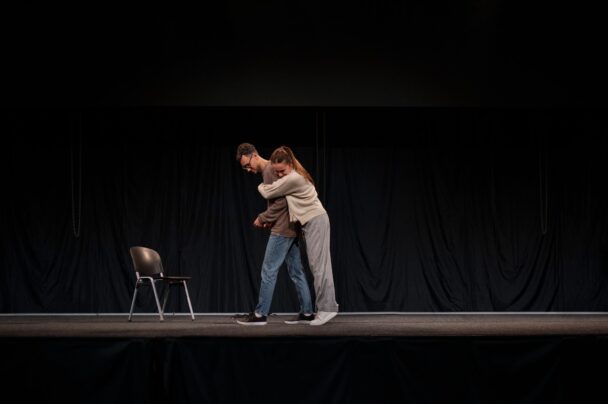
Augusto Boal’s Theatre of the Oppressed, rooted in critical pedagogy, offers teachers a powerful framework to explore in their everyday teaching environment social issues, encourage empathy, and support students’ agency thanks to the use of creative and interactive expressive methods.
This course introduces secondary teachers to Boal’s key techniques (such as Image Theatre and Forum Theatre), and explores how to use them as practical classroom tools for dialogue, conflict management and exploration, and social awareness.
Through practical activities, group reflection, and collaborative planning, participants will learn how to facilitate activities that help students better express themselves and engage critically with the world around them.
The course also highlights the facilitation skills needed to create psychologically safe, inclusive learning spaces.
Throughout the week, participants will practice strategies to guide students’ emotional regulation, manage sensitive topics, and encourage inclusive participation in the classroom environment.
By the end of the course, participants will have acquired concrete methods to integrate and implement Boal’s approach into their everyday teaching.
They will be able to design and facilitate activities that promote empathy, dialogue, and critical awareness, helping students become active participants in their own learning and in society.
What is included
Learning outcomes
The course will help participants to:
- Understand the principles of critical pedagogy and the educational philosophy behind August Boal’s Theatre of the Oppressed;
- Experience and apply Boal’s core techniques (e.g., Image Theatre, Forum Theatre) in a safe, supportive, and reflective learning environment;
- Use symbolic and visual storytelling- including insights from the museum visit – to enrich classroom dialogue and connect with Boal’s methods;
- Identify and develop essential facilitation skills and classroom tools to guide participatory activities, including emotional safety, neutrality, and inclusive dialogue;
- Adapt Boal’s techniques to use in their own Secondary school classroom, designing lesson ideas and participatory activities suited to different subjects and student needs;
- Reflect on their own educational practice and explore ways to empower students through socially engaged, participatory, and student-centred approaches.
Tentative schedule
Day 1 – Introduction to the course and critical pedagogy
- Introduction to the course, the school, and the external week activities;
- Icebreaker activities;
- Presentations of the participants’ schools & expectations;
- Introduction to Critical Pedagogy: Paulo Freire and Augusto Boal;
- Discussion: Why critical pedagogy matters in today’s secondary classrooms.
Day 2 – Boal’s work and its relevance to education
- Boal’s life and historical context;
- Introduction to Theatre of the Oppressed: key concepts and intentions;
- Practical session: Boal’s icebreaker and trust-building games;
- Reflection circle: How do these ideas connect to your teaching reality?
Day 3 – Techniques of the theatre of the oppressed
- Practical exploration of Boal’s core techniques: Image Theatre; Forum Theatre; Invisible Theatre;
- The Role of the Joker (facilitator);
- Reflection: How can these techniques empower student voice and agency?;
- Museum Visit: exploring symbolic storytelling and visual narratives.
Day 4 – Adapting Boal’s methods for secondary school
- Museum visit reflection;
- The symbolic character: puppets, images, and metaphors;
- Workshop: creating and using symbolic characters in the classroom;
- Case studies: Boal-inspired projects implemented in schools;
- Adapting Image & Forum Theatre to different school subjects;
- Reflection: Where and how can these techniques support your students?
Day 5 – Looking ahead
- Facilitation skills for participatory and emotionally safe classrooms;
- Practical tools for guiding dialogue, managing sensitivity, and supporting student expression;
- Designing a Boal-inspired activity for your own classroom;
- Peer feedback and collaborative refinement;
- Final reflection: What have you learned, and how will it shape your teaching practice?
Day 6 – Course closure and cultural activities
- Course evaluation: round-up of acquired competences, feedback, and discussion;
- Awarding of the course Certificate of Attendance;
- Excursion and other external cultural activities.
Download or share
Add to favouritesGet weekly recaps on confirmed sessions!