Targeted to Intermediate English (B1+) speakers.Read more
This is the standard requirement for most courses. Participants at this level can participate actively in discussions and manage everyday and professional situations. If they are unsure about their English level, they can test it here or explore our courses facilitated in Basic English.
Cross-Curricular.Read more
The listed audiences are those for whom the course is especially recommended, but courses are not exclusive to them and are open to everyone. In fact, most of our workshops are built around the collective sharing of participants’ experiences and having a variety of profiles enriches the learning process and is highly encouraged!
Description
Sustainability is no longer a future concern: it’s already a present responsibility for schools, communities, and institutions.
We all have a part to play in creating solutions at home, work, and in schools. But words and promises are not enough.
In this sense, educators play a key role in helping young people understand environmental challenges and develop practical ways to respond to them.
This course is designed to help teachers take action immediately to integrate sustainability in their organization or classroom.
This way, thanks to a fun and informative approach, they will be able to bring sustainability into their everyday practice through concrete projects, collaborative learning, and real-world inspiration.
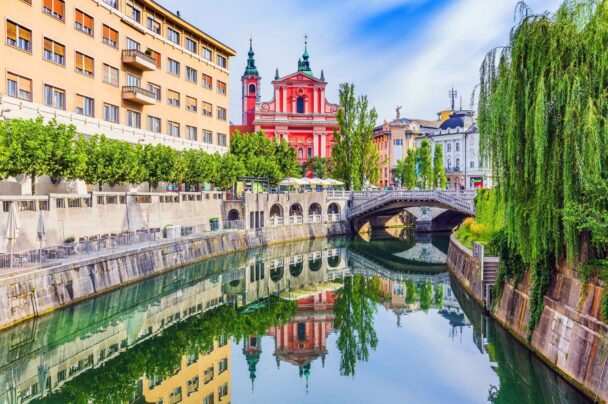
And Slovenia surely offers a particularly meaningful context for this exploration. Often described as the “green heart of Europe”, the country is internationally recognized for its environmental policies, sustainable tourism, and strong commitment to biodiversity (it runs a “Green Slovenia” certification for tourism).
More than half of its territory is protected, and Ljubljana became the first European capital to commit to a zero-waste strategy.
During the week, participants will explore how sustainability can move from theory to action.
Taking as inspiration several examples of how the country has made such progress, through visits, case studies, and practical workshops, they will discover examples of sustainable initiatives related to areas such as waste reduction, green mobility, food systems, biodiversity, and eco-schools.
Participants will have a chance to observe, ask questions, and experiment. Then adapt practical activities to make a significant, positive environmental impact in their schools or communities.
The course intends to combine reflection with hands-on learning. It will provide practical information on what sustainability means and why it is important.
Plus ways to design, implement, and measure improvements in everyday life and work.
The goal will be to introduce participants to frameworks, tools, and approaches to raising engagement and developing life skills and knowledge, such as Project-Based Learning (PBL) and Teaching Beyond Subjects.
Participants will be given the opportunity to collaborate, exchange ideas, and develop practical solutions that can be transferred to their own educational contexts.
By the end of the course, participants will have gained a clearer understanding of the key terms, challenges, and opportunities that relate to environmental sustainability.
They will have explored examples of leading practice on how to implement them and will have generated ideas for their own professional and community projects.
What is included
Learning outcomes
The course will help participants to:
- Understand key concepts and frameworks related to environmental sustainability;
- Analyze examples of sustainable practices and projects from the Slovenian context;
- Use approaches such as Project-Based Learning and interdisciplinary teaching to address sustainability topics;
- Design efficient practical activities and initiatives that support more sustainable and eco-friendly school and organizational practices;
- Engage learners in discussions and projects related to environmental responsibility and active citizenship;
- Communicate sustainability topics more confidently using both digital and non-digital tools;
- Know how to engage learners in the topic of sustainability and the environment;
- Develop a simple sustainability project or action plan adapted to their own educational context.
Tentative schedule
Day 1 – Introduction to the course
- Introduction to the course, the school, and the external week activities;
- Icebreaker activities;
- Presentations of the participants’ schools.
What is sustainability and what it is not
- What is sustainability? Key concepts and common misconceptions;
- Slovenia’s Green Credentials as a case study: biodiversity, tourism, and environmental policies;
- How to avoid “greenwashing”;
- Group discussion: sustainability challenges in participants’ own contexts.
Day 2 – Towards zero waste
- Sustainable project visit/case study: zero-waste initiatives;
- Exploring practical strategies for reducing waste in schools and communities;
- Introduction to Project-Based Learning for Sustainability Education;
- Workshop: designing small-scale sustainability activities;
- Reflection and discussion: turning ideas into action.
Day 3 – Nurturing nature and green food
- Sustainable project visit/case study related to biodiversity or food systems;
- Exploring the relationship between sustainability, food, and local environments;
- Digital and analogue tools for environmental education;
- Hands-on workshop: engaging learners through practical sustainability activities;
- Group discussion: encouraging participation and environmental awareness.
Day 4 – Green transport and eco schools
- Visit to a sustainable school or environmental initiative;
- Exploring eco-school practices and green mobility solutions;
- Teaching Beyond Subjects: interdisciplinary approaches to sustainability;
- Workshop: connecting sustainability to different school subjects;
- Group work: developing classroom-ready activities and project ideas.
Day 5 – Creating your own eco plan
- Reviewing the week: tools, approaches, and good practices;
- Step-by-step development of a sustainability action plan or project;
- Presentation of participants’ project ideas;
- Peer feedback and collaborative reflection;
- Final discussion: creating long-term impact in schools and communities.
Day 6 – Course closure and cultural activities
- Course evaluation: round-up of acquired competencies, feedback, and discussion;
- Awarding of the course Certificate of Attendance;
- Excursion and other external cultural activities.
Download or share
Add to favouritesGet weekly recaps on confirmed sessions!