Targeted to Advanced English (B2+) speakers.Read more
This requirement applies mainly to courses for language teachers, CLIL methodology, and other programs where a strong command of English is needed. Participants at this level can work fluently and confidently with complex content in academic or professional contexts. Test your level here.
Primary Teachers.Read more
The listed audiences are those for whom the course is especially recommended, but courses are not exclusive to them and are open to everyone. In fact, most of our workshops are built around the collective sharing of participants’ experiences and having a variety of profiles enriches the learning process and is highly encouraged!
Also available as part of a festival
This course is also offered within the Digital Transformation Festival taking place in Split during the Erasmus Days (12–17 October 2026).
Description
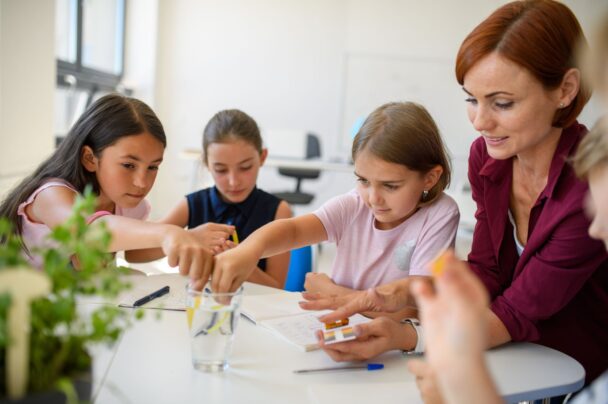
This course offers an extremely practical and comparative exploration of Croatian and European primary education systems, combining classroom observation, guided reflection, and professional exchange.
It focuses on the first four years of education, offering participants an authentic insight into how teaching, learning, and school life are organized in Croatia.
By taking part in this course, participants will gain a first-hand understanding and discover the details of the Croatian educational system through everyday lesson observations and active participation.
They will also have the opportunity to share and discuss their own national education systems, comparing structures, teaching practices, and learning outcomes across Europe.
This way, they will gain a comprehensive knowledge of the differences, similarities, benefits, and drawbacks of each system.
The course takes place in a primary school in Split that is actively involved in Erasmus+ projects.
Participants will learn about staff and learners’ daily life, exploring how the school manages teaching and learning, staff collaboration, student engagement, and extracurricular projects and activities that foster creativity and inclusion.
By the end of the course, participants will have observed and taken part in lessons across various school subjects – such as maths, science, languages, art, and physical education – gaining valuable insights into classroom organization, student motivation, outdoor activities, and innovative teaching methods.
They will leave with not only a clear understanding of the Croatian Primary education system, but also with practical inspiration and new ideas to adapt and apply in their own schools, while strengthening their European professional network.
What is included
Learning outcomes
This course will help participants to:
- Understand how primary education (ages 6–10) is organized in Croatia and compare it with other European systems from a practical and pedagogical perspective;
- Observe and analyze daily school life, lesson organization, and teaching practices in Croatian primary schools;
- Observe real classroom practices across different subjects (mathematics, language, science, art, music, and PE);
- Identify effective teaching strategies for young learners, including the use of games (and toys), outdoor activities, and interactive approaches;
- Explore practical methods to support student engagement, inclusion, and participation in the early years;
- Critically evaluate similarities and differences across different Primary educational systems from a practical point of view;
- Exchange experiences with international colleagues and consider opportunities for future cooperation and projects;
- Adapt observed ideas and practices to their own teaching context.
Tentative schedule
Day 1 – Introduction to the course
- Introduction to the course, the school, and the external week activities;
- Icebreaker activities;
- Presentations of the participants’ schools.
The Croatian Educational System as part of a European Education
- Overview of the Croatian education system;
- Focus on primary education (ages 6–10): structure, curriculum, and organization;
- Group discussion: similarities and differences across European education systems.
Day 2 – Creative Mathematics for Collaborative Learning
- School tour and introduction to the learning environment;
- Observation in the classroom: Math lesson, Croatian lesson;
- Focus on teaching strategies for young learners: creativity, interaction, and engagement.
Workshops
- Designing collaborative and creative learning activities;
- Group activities to generate new ideas about collaboration, creativity, and critical thinking.
Day 3 – Languages and art lessons
- Observation in the classroom: Croatian lesson, Art lesson;
- Teaching the mother tongue: literature and reading at a Primary level.
Workshops
- Fostering collaboration among students and teachers;
- Exploring digital tools to support communication and learning.
Day 4 – Science and Outdoor Lesson
- Observation in the classroom: Science lesson, PE lesson;
- The role of movement and active learning in early education;
- Inclusion strategies and support for diverse learners, including SEN students;
- Outdoor lesson: using the local environment as a learning space across subjects.
Workshops
- Sustainability and climate change education in school programs;
- The use of digital tools to support learning about sustainability.
Day 5 – Games for Teaching and Learning
- Observation in the classroom: Math, Croatian language, and class meeting;
- Using games (toys) for a cross-curricular approach;
- Designing simple cross-curricular activities using games and digital tools.
Day 6 – Course closure and cultural activities
- Course evaluation: round-up of acquired competencies, feedback, and discussion;
- Awarding of the course Certificate of Attendance;
- Excursion and other external cultural activities.
Download or share
Add to favouritesGet weekly recaps on confirmed sessions!