Targeted to Intermediate English (B1+) speakers.Read more
This is the standard requirement for most courses. Participants at this level can participate actively in discussions and manage everyday and professional situations. If they are unsure about their English level, they can test it here or explore our courses facilitated in Basic English.
Cross-Curricular.Read more
The listed audiences are those for whom the course is especially recommended, but courses are not exclusive to them and are open to everyone. In fact, most of our workshops are built around the collective sharing of participants’ experiences and having a variety of profiles enriches the learning process and is highly encouraged!
Description
European schools often promote democratic values and peace in their curricula. However, how can teachers address topics such as conflict, division, identity, and coexistence without oversimplifying them or creating tension in their classrooms?
In fact, many teachers often lack concrete tools, tried-and-tested methodologies, and real examples to help them move beyond the teaching of abstract values to a meaningful learning experience for the students.
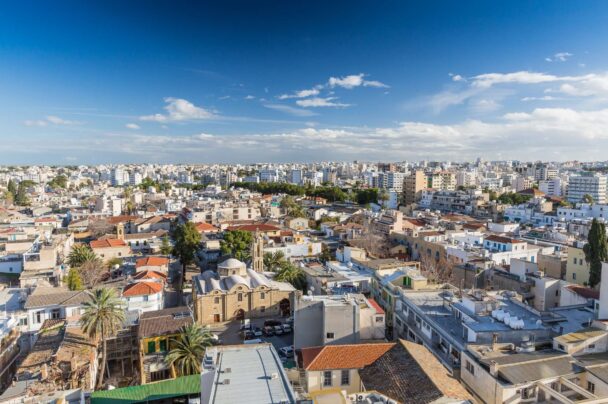
Set in Nicosia, the last divided capital of Europe, this training uses the city as a living case study of how education can act as a bridge in divided societies.
Participants will explore how the Green Line, which separates the city, has shaped generations of students and continues to influence educational practice and social interaction.
Throughout the week, participants will explore different educational approaches to address division. They will engage with real case studies from Cyprus, activities drawn from schools, youth projects, and non-formal education initiatives.
These examples are particularly useful because they provide insight into how educators can address sensitive issues such as identity, memory, coexistence, and belonging, without missing the chance to highlight both the challenges involved and the approaches that have proven more effective over time.
Course activities will take place through a combination of case study analysis, experiential workshops, and guided field trips along and across Cyprus’ Green Line.
Participants will be asked to actively participate in a set of dialogue-based activities, role-play, mapping, and reflective exercises that aim at mirroring peace education practices used with students, allowing educators to experience these methods from the learner’s perspective.
By the end of the course, participants will have explored a range of different approaches and classroom practices to address these sensitive topics.
They will leave being able to adapt the practical ideas learnt throughout the course to their own teaching contexts, fostering dialogue and promoting peaceful coexistence, regardless of borders, cultures, or differing perspectives.
What is included
Learning outcomes
The course will help participants to:
- Analyze the role of education in divided and post-conflict societies using the case of Nicosia as a reference and a concrete case study;
- Apply key peace education principles and methodologies in formal and non-formal learning environments;
- Design classroom activities that promote dialogue, empathy, and respectful cooperation among students;
- Adapt experiential and outdoor learning approaches to address sensitive and controversial topics safely;
- Evaluate real peace education case studies and identify transferable practices for their own school contexts;
- Reflect critically on their role as educators in promoting democratic values, inclusion, and peaceful coexistence.
Tentative schedule
Day 1 – Course introduction
- Introduction to the course, the school, and the external week activities;
- Icebreaker activities;
- Presentations of the participants’ schools.
Understanding peace education in divided contexts
- Overview of peace education principles and challenges teachers face;
- Historical and social background of Nicosia as a divided capital;
- Reflection on conflict, identity, and education in participants’ own contexts.
Day 2 – The Green line as a learning space
- Guided exploration of the Green Line and “buffer zone”;
- Outdoor learning activities: A focus onspace, memory, and narratives;
- Discussion: How to use place-based education to teach sensitive issues.
Day 3 – Peace education case studies from Cyprus
- Presentation of real peace education and dialogue initiatives implemented in Cyprus;
- Analysis of methodologies, learning activities, and outcomes;
- Hands-on workshops: activities inspired by existing case studies;
- Discussion: reflection on transferability to participants’ own educational systems.
Day 4 – From experience to classroom practice
- Design of peace education lesson plans and activities;
- Role-play, dialogue circles, and cooperative learning techniques;
- Adapting peace education approaches to different age groups, subjects, and classroom realities.
Day 5 – Implementation, challenges, and sustainability
- Strategies for integrating peace education into curricula;
- Managing resistance, sensitive discussions, and classroom dynamics;
- Action planning: applying learning back in participants’ schools.
Day 6 – Course closure and cultural activities
- Course evaluation: round-up of acquired competencies, feedback, and discussion;
- Awarding of the course Certificate of Attendance;
- Excursion and other external cultural activities.
Download or share
Add to favouritesGet weekly recaps on confirmed sessions!