Targeted to Intermediate English (B1+) speakers.Read more
This is the standard requirement for most courses. Participants at this level can participate actively in discussions and manage everyday and professional situations. If they are unsure about their English level, they can test it here or explore our courses facilitated in Basic English.
Pre-Primary Teachers, Primary Teachers.Read more
The listed audiences are those for whom the course is especially recommended, but courses are not exclusive to them and are open to everyone. In fact, most of our workshops are built around the collective sharing of participants’ experiences and having a variety of profiles enriches the learning process and is highly encouraged!
Description
In recent years, more and more Pre-Primary and Primary teachers have noticed a growing challenge.
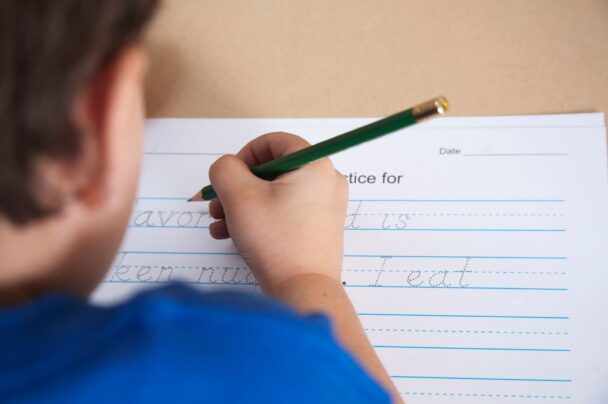
Compared to the past, children increasingly struggle with basic fine motor tasks such as even holding a pencil correctly, cutting with scissors, or performing precise hand movements needed for writing.
This trend is often linked to more screen time and fewer opportunities for outdoor play and hands-on activities like playing with crayons, clay, and blocks.
When motor skills like these are underdeveloped, teachers face a range of classroom difficulties.
Children may write slowly, struggle with coordination tasks, tire easily, or avoid testing themselves in drawing and writing activities due to a lack of confidence.
These growing difficulties can also affect attention, independence, and the sense of achievement that comes from “doing things by themselves”.
This course is designed to help Pre-Primary and Primary teachers enhance their students’ fine motor and writing skills through practical, age-appropriate activities.
Participants will learn what skills are expected at different stages of children’s development, how to design suitable tasks accordingly, and when to offer additional support.
The course will combine theory sessions with plenty of hands-on practice. Teachers will try out activities useful to stimulate hand muscles and coordination, they will share classroom experiences, and they will be introduced to simple classroom strategies.
Outdoor and creative tasks, such as using natural resources, crafts, or project-based learning, will also be explored.
By the end of the course, participants will have a toolkit of concrete practical activities and routines to help children develop both motor skills and writing abilities, influencing and improving students’ cognitive development at the same time.
They will gain a deeper understanding of the role that fine and gross motor skills play in child development, and they will be able to design activities that match their students’ needs while helping them build confidence, independence, and curricular success in their learning experience.
What is included
Learning outcomes
The course will help participants to:
- Understand the role of fine motor skills in early learning and how they support handwriting, attention, and independence in Primary and Pre-school children;
- Recognise common conditions and classroom difficulties that can affect children’s motor development;
- Implement fine motor activities as part of practical, everyday classroom routines;
- Differentiate practical activities and materials for different age groups;
- Incorporate natural and low-cost materials to foster children’s motor development through play and exploration;
- Design project-based learning activities for different school subjects to foster motor skills development;
- Reflect on and adapt their teaching practice to support, at every stage, their students’ motor development.
Tentative schedule
Day 1 – Course introduction
- Introduction to the course, the school, and the external week activities;
- Icebreaker activities;
- Presentations of the participants’ schools.
The role of fine motor skills in child development
- Why are fine motor skills so important for children’s learning and independence?;
- Understanding the conditions and challenges that can affect fine motor skills development in Pre-school and Primary children.
Day 2 – Developing motor skills for different age groups
- Age-appropriate expectations for Pre-school and Primary students’ skills;
- Simple activities and tips for the development of small hand muscles;
- Brain gym and “hand aerobics” to improve children’s dexterity;
- Case studies and discussion on supporting different groups of learners.
Day 3 – Outdoor and nature-based activities
- Practical activities for fine and gross motor development in nature;
- Using natural and low-cost resources for creative classroom projects;
- Workshop: designing outdoor-inspired activities that stimulate motor coordination and creativity in students.
Day 4 – Hand-eye coordination and creative practice
- Exploring hand–eye coordination through creative tasks;
- Museum visit: observation and inspiration from art and artefacts;
- Workshop: jewelry-making and other craft-based activities to refine motor skills.
Day 5 – Project-based learning and curriculum integration
- Examples of project-based activities in different subjects (art, science, mathematics, etc.);
- Group project work: designing and presenting original activity ideas;
- Peer feedback and collaborative discussion.
Day 6 – Course closure and cultural activities
- Course evaluation: round-up of acquired competences, feedback, and discussion;
- Awarding the course Certificate of Attendance;
- Excursion and other external cultural activities.
Download or share
Add to favouritesGet weekly recaps on confirmed sessions!