Targeted to Intermediate English (B1+) speakers.Read more
This is the standard requirement for most courses. Participants at this level can participate actively in discussions and manage everyday and professional situations. If they are unsure about their English level, they can test it here or explore our courses facilitated in Basic English.
Cross-Curricular.Read more
The listed audiences are those for whom the course is especially recommended, but courses are not exclusive to them and are open to everyone. In fact, most of our workshops are built around the collective sharing of participants’ experiences and having a variety of profiles enriches the learning process and is highly encouraged!
Description
Many students start school with a natural curiosity about the world. However, this curiosity can fade over time if learning feels disconnected from real life.
When lessons remain too much theoretical or exclusively classroom-bound often fail to engage students or help them see the relevance of what they learn.
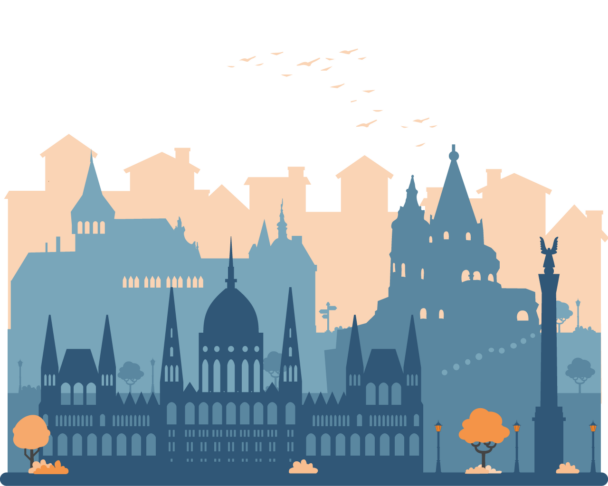
Building on the unique setting of Budapest, this course will explore how cultural heritage together with urban environments, can be successfully used as engaging learning tools that can best support and enhance experiential and student-centered approaches through a combination of Experiential Learning and Visual Thinking Strategies (VTS).
Rather than simply “taking learning outside”, this course intends to draw on the cultural heritage of the Hungarian capital to guide participants in discovering how to plan and design learning experiences capable of combining observation, interpretation, reflection, and students’ active participation.
Using Budapest as a learning environment, learners will be given the opportunity to work with a wide range of cultural inputs – including artworks, architecture, public spaces and everyday urban life – to experience how learning can emerge from careful observation and guided dialogue.
Also, through the lens of VTS, participants will learn how to facilitate student-centered discussions that promote critical thinking, communication and multiple perspectives, without having to rely on predefined answers.
Thanks to a combination of hands-on activities, guided reflections and analysis, participants will use the experiential learning approach to find the perfect educational framework to create engaging learning situations outside the classroom and to connect them to specific curriculum goals.
Creative methodologies such as storytelling and photography will then be used not as “extras”, but as tools to deepen interpretation and personal connection with content.
Taking part in outdoor explorations, collaborative tasks and reflective sessions in the unique setting of Budapest, participants will explore themes such as cultural identity, European values, urban transformation and responsible citizenship.
They will be treated not as abstract topics but as questions that can help students in connecting what they see with broader social, historical and cultural perspectives.
By the end, participants will be able to use experiential learning and VTS to foster discussion and critical thinking in their own group and school contexts.
They will have acquired the competences to transform cultural and everyday environments into meaningful learning opportunities that support student engagement, interpretation and deeper understanding.
What is included
Learning outcomes
The course will help participants to:
- Understand and apply the principles of experiential learning to design meaningful, student-centered activities;
- Grasp the principles of experiential learning and apply Kolb’s learning cycle in their teaching practice;
- Apply Visual Thinking Strategies (VTS) to develop students’ observation and “viewing” skills;
- Apply the 5Cs (critical thinking, creativity, communication, collaboration and cross-cultural awareness) in a practical and integrated way;
- Use cultural heritage and urban environments as learning resources across subjects;
- Guide students in connecting what they observe with broader cultural, social and historical contexts;
- Integrate creative approaches such as storytelling and photography to support engagement and reflection;
- Design inclusive and adaptable activities suitable for different learners, subjects and school contexts.
Tentative schedule
Day 1 – Introduction to the course and experiential learning
- Introduction to the course, the school, and the external week activities;
- Icebreaker activities;
- Presentations of the participants’ schools.
- What is experiential learning? Introduction to Kolb’s learning cycle;
- Creating meaningful learning environments: from experience to reflection;
- Introduction to Visual Thinking Strategies (VTS) through Hungarian artworks;
- VTS activity: observation, interpretation and dialogue (e.g. using artworks from the Hungarian National Gallery).
Day 2 – Budapest as a living classroom: culture and observation
- What is culture? Visible and invisible dimensions;
- Cultural awareness and European values in the Hungarian context;
- Guided exploration of central Budapest (e.g. Deák Square, historic districts, public spaces);
- Scavenger hunt: discovering symbols, architecture and everyday culture;
- Exploration of café culture (kávéház) as a learning space (e.g. Metropolitan Szabó Ervin Library café);
- Reflection: interpreting what we observe in real-world contexts.
Day 3 – History, identity, and urban narratives
- Developing “viewing skills”: questioning, listening, and interpretation;
- City walk across key historical areas:
- Danube riverbank (e.g., Shoes on the Danube Bank);
- Jewish District and Jewish Museum;
- Open Society Archives (or similar exhibitions);
- Themes: memory, identity, borders, coexistence;
- The 5Cs in practice through guided discussion and collaborative tasks;
- Reflection: “How does history live in cities?”
Day 4 – Traditions, everyday culture and creative interpretation
- Visit to the Museum of Ethnography (or similar institution);
- Practical application of VTS in a museum setting;
- Exploration of Hungarian traditions and contemporary culture:
- Great Market Hall (food, symbols, everyday life)
- Folk art shops and community cultural spaces
- Hands-on activities:
- Storytelling (myths, identity, narratives);
- Photography as an educational tool;
- Introduction to creativity and flow (Csíkszentmihályi) in learning;
- Reflection: tradition vs modern identity
Day 5 – From experience to teaching practice
- Exploring contemporary cultural spaces (e.g. LX-style hubs / Szimpla Kert / youth art galleries such as Deák17);
- Themes: youth culture, urban transformation, European identity;
- Group project: designing an experiential and culture-based learning activity;
- Peer teaching, feedback and reflection;
- Action planning: adapting experiential learning and VTS to participants’ contexts.
Day 6 – Course closure and cultural activities
- Course evaluation: round-up of acquired competences, feedback, and discussion;
- Awarding of the course Certificate of Attendance;
- Excursion and other external cultural activities.
Download or share
Add to favouritesGet weekly recaps on confirmed sessions!