Targeted to Intermediate English (B1+) speakers.Read more
This is the standard requirement for most courses. Participants at this level can participate actively in discussions and manage everyday and professional situations. If they are unsure about their English level, they can test it here or explore our courses facilitated in Basic English.
Cross-Curricular.Read more
The listed audiences are those for whom the course is especially recommended, but courses are not exclusive to them and are open to everyone. In fact, most of our workshops are built around the collective sharing of participants’ experiences and having a variety of profiles enriches the learning process and is highly encouraged!
Description
Many teachers recognise the importance of sustainability education, yet struggle to move beyond theory.
Concepts such as circular economy, climate action, or eco-literacy are often taught abstractly, leaving students disconnected from real environmental challenges and everyday practices.
This course addresses that gap by immersing educators in the Eco-Living Lab, a fully operational green innovation and citizen engagement space.
Rather than learning about sustainability through examples alone, participants experience firsthand how an Eco-Living Lab functions as a real educational environment.
This on-site access offers a unique learning opportunity, allowing teachers to observe, use, and reflect on a working model that can be adapted to schools and communities.
The Eco-Living Lab serves as an interactive hub for sustainability education, citizen science, and community activation.
Participants engage with practical learning stations focused on urban greening, sustainable consumption, circular economy practices, and environmental monitoring.
Through guided, hands-on activities, teachers explore how abstract sustainability concepts can be transformed into tangible learning experiences.
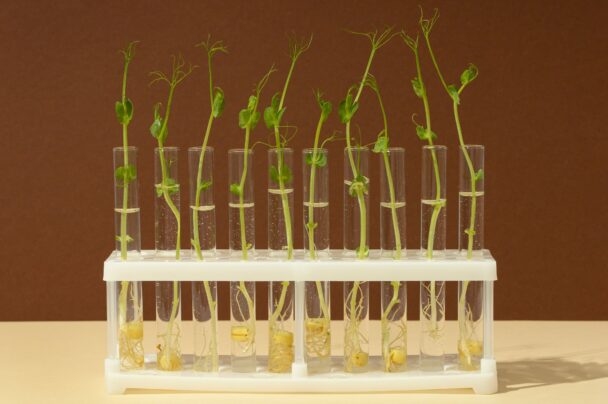
The course includes work with vertical gardening systems using both hydroponic and traditional techniques, composting facilities for organic waste transformation and soil regeneration, and environmental sensors that track air, water, and soil quality.
These elements are used to demonstrate how citizen science and inquiry-based learning can be integrated into everyday teaching practice.
Participants also take part in DIY green living workshops, such as creating eco-friendly household products, upcycling plastic waste into 3D printing filament, and exploring closed and open ecosystems through terrariums.
By experiencing a functioning Eco-Living Lab in practice, teachers gain concrete inspiration, transferable ideas, and practical strategies to design meaningful sustainability projects in their own educational contexts.
What is included
Learning outcomes
The course will help participants to:
- Design and implement sustainability learning activities using an Eco-Living Lab approach;
- Apply citizen science methods to engage students in monitoring air, water, and soil quality;
- Integrate urban greening practices, including vertical gardening and composting, into school-based projects;
- Design hands-on workshops that promote the circular economy and sustainable consumption;
- Facilitate participatory learning activities that connect environmental literacy with everyday life;
- Adapt Eco-Living Lab activities to different age groups and educational contexts;
- Promote active citizenship and community engagement through sustainability education.
Tentative schedule
Day 1 – Introduction to the course and sustainability education
- Introduction to the course, the school, and the external week activities;
- Icebreaker activities;
- Presentations of the participants’ schools;
- Introduction to the Eco-Living Lab and sustainability education;
- The Eco-Living Lab as a model for sustainability education and citizen engagement;
- From theory to action: why hands-on environmental learning matters;
- Mapping sustainability challenges in participants’ school and community contexts.
Day 2 – Urban greening and living systems
- Exploration of vertical gardening systems using hydroponic and traditional techniques;
- Hands-on activities on plant growth, water efficiency, and food sustainability;
- Designing school-friendly urban greening projects;
- Discussion on linking greening initiatives to curriculum outcomes.
Day 3 – Circular economy and sustainable living practices
- Composting systems: organic waste transformation and soil regeneration;
- DIY workshops on eco-friendly products (candles, soaps, kitchen cleaners, bio-toothpaste);
- Upcycling plastic waste: transforming bottles into 3D printing filament;
- Exploring circular economy concepts through practical examples.
Day 4 – Citizen science and environmental monitoring
- Introduction to environmental sensors for air, water, and soil quality;
- Hands-on data collection, analysis, and interpretation activities;
- Using environmental data to foster inquiry-based learning;
- Designing student-led citizen science projects.
Day 5 – From Eco-Living Lab to classroom and community
- Exploring closed and open ecosystems through terrariums;
- Designing Eco-Living Lab-inspired lesson plans and projects;
- Community activation and school engagement strategies;
- Action planning: implementing Eco-Living Lab activities in participants’ own contexts.
Day 6 – Course closure and cultural activities
- Course evaluation: round-up of acquired competencies, feedback, and discussion;
- Awarding of the course Certificate of Attendance;
- Excursion and other external cultural activities.
Download or share
Add to favouritesGet weekly recaps on confirmed sessions!