Targeted to Intermediate English (B1+) speakers.Read more
This is the standard requirement for most courses. Participants at this level can participate actively in discussions and manage everyday and professional situations. If they are unsure about their English level, they can test it here or explore our courses facilitated in Basic English.
Cross-Curricular.Read more
The listed audiences are those for whom the course is especially recommended, but courses are not exclusive to them and are open to everyone. In fact, most of our workshops are built around the collective sharing of participants’ experiences and having a variety of profiles enriches the learning process and is highly encouraged!
Introductive Course.Read more
This course is designed as an entry point to the topic. There are no entry tests, and it is open to everyone, as the exchange of diverse perspectives enriches the learning experience. If you prefer a more advanced course on the topic, we encourage you to explore our catalogue further.
Description
Are you struggling to manage a classroom where students feel unheard, and conflict seems inevitable?
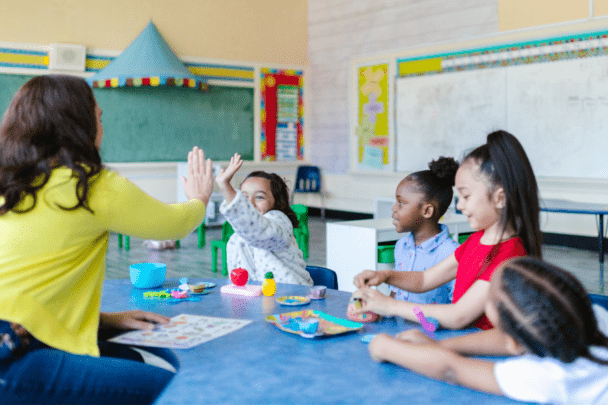
As teachers, if we want to be able to manage the classroom and help our students, we need to master effective methods to give voice to the different needs present within each of us, as well as within the classroom, to create an environment for all of them to feel recognized and appreciated as valued members.
This course will give you the practical tools to move beyond conflict management and learn to prevent it. You’ll discover how to create a peaceful learning environment where every student feels truly free to express their voice, building a strong and inclusive classroom culture.
Furthermore, it will introduce Deep Democracy as an effective technique to prevent conflict, thereby helping students understand each other, have a respectful attitude, show empathy towards others, and build positive relations.
While conflict is often perceived as a negative process, the Deep Democracy method proposes to mine the wisdom that lies below it. The real issue is not about how to avoid conflict, but actually about how to manage it properly.
In order to do that, the method emphasizes the importance of recognizing the need to go into conflict before resolving it as a necessary step. Properly managing conflict requires creating appropriate safety rules.
The first rule of the Method acknowledges that everyone has their own unique lens on the world. Thus, everyone is right, but no one has a monopoly on the truth! The second rule encourages participants to express all their frustration in the conflict, while the third encourages them to look for the “gift” of the conflict, that is, a minimal truth in what the other said that contains a possibility for personal and relational growth.
As a participant in the course, you will learn the Deep Democracy method to understand the reasons for the conflict before it even occurs within the classroom, as well as all kinds of groups, building and strengthening the classroom culture, creating a peaceful learning environment where every individual is deeply heard and feels truly free to express his/her feelings on the basis of mutual respect.
Throughout the course, you will also take part in a series of practical activities that can be implemented in different parts of your lessons. For instance, there will be effective ice-breakers, team-building exercises, classroom management tools, and group-dynamic games.
By the end of this course, you will be more confident in leading your classes in a more inclusive way. Furthermore, you will be able to easily deal with the resistance to decision-making by ensuring non-violent communication.
Please note: The course includes the theory and practical tools of the Deep Democracy method at an introductory level.
What is included
Learning outcomes
The course will help the participants to:
- Realize tensions remaining unspoken and take precautions;
- Appreciate the wisdom of the minority, and embrace diversity;
- Understand the basics of Deep Democracy;
- Apply the different tools of the Deep Democracy method;
- Implement the practices of Deep Democracy in classrooms;
- Adapt Deep Democracy activities to their classes;
- Promote student voice and agency in classrooms;
- Create a safe and peaceful classroom environment.
Tentative schedule
Day 1 – Introduction to the course
- Introduction to the course, the school, and the external week activities;
- Icebreaker activities and school presentations;
- What is Conflict?;
- Reactions to conflict, discovering different conflict styles;
- Sharing circle: how you prevent conflict in your classes.
Day 2 – What is the Deep Democracy method?
- Introduction to Deep Democracy;
- The Iceberg of Conscious and Unconscious;
- The Resistance Line;
- Hands-on Activities.
Day 3 – Deep democracy practices I
- 4 Steps tool;
- Soft Shoe Shuffle tool;
- How to implement them in their classes;
- Practical workshop.
Day 4 – Deep democracy practices II and outdoor activities
- Check-in and Check-out tools;
- Debate Tool;
- How to implement them in their classes;
- Practical workshop;
- Outdoor Activity: Golden Arrows.
Day 5 – Week review and practical workshop
- Review of the theory and the tools;
- Try them all out!;
- Presenting extra resources: Empathy activities, non-violent communication practices, etc.
Day 6 – Course closure & cultural activities
- Course evaluation: round-up of acquired competencies, feedback, and discussion;
- Awarding of the course Certificate of Attendance;
- Excursion and other external cultural activities.
Download or share
Add to favouritesGet weekly recaps on confirmed sessions!