Targeted to Intermediate English (B1+) speakers.Read more
This is the standard requirement for most courses. Participants at this level can participate actively in discussions and manage everyday and professional situations. If they are unsure about their English level, they can test it here or explore our courses facilitated in Basic English.
Cross-Curricular.Read more
The listed audiences are those for whom the course is especially recommended, but courses are not exclusive to them and are open to everyone. In fact, most of our workshops are built around the collective sharing of participants’ experiences and having a variety of profiles enriches the learning process and is highly encouraged!
Description
When recognized and used in the right way, cultural heritage can help students make more sense of who they are, where they belong, and how they relate to others and to their own environment.
As misinformation, social fragmentation, and unequal access to cultural experiences seem to be spreading today, working with cultural heritage in meaningful and engaging ways can support critical thinking, active participation, and a stronger sense of responsibility.
This course will equip primary and secondary school teachers with the knowledge, skills, and creative methodologies needed to explore tangible and intangible cultural heritage, in order to strengthen identity, inclusion, and democratic values in education.
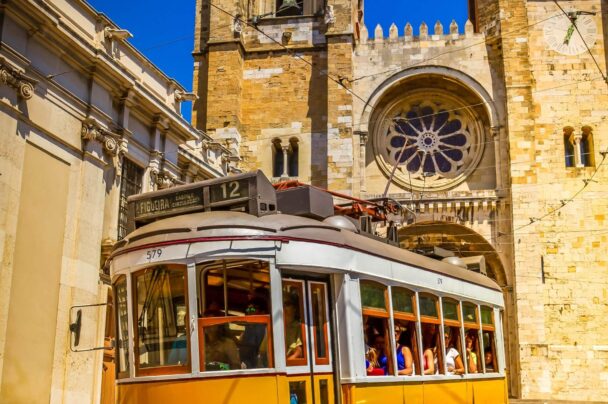
In this sense, Lisbon provides a particularly rich setting for this exploration. Its urban landscape, in fact, reflects centuries of cultural exchange, migration, and social transformation, and it offers multiple “entry points” for educational work.
Throughout the week, participants will experience first-hand the educational role of tangible heritage sites and intangible culture by exploring Lisbon’s historic urban landscape – from Alfama’s medieval streets to contemporary spaces – as a living classroom.
Through engaging visits to Lisbon museums, historic neighborhoods such as Alfama, and creative hubs like LX Factory, participants will learn how to use hands-on creative practices as pedagogical approaches to heritage.
Participants will reflect on how to use critical cartography to analyze urban spaces as sites of representation and civic participation within Lisbon’s layered historical landscape.
Also storytelling and critical writing exercises can represent a powerful way to raise awareness on silenced narratives and diverse perspectives in cultural heritage, drawing from Lisbon’s history, including migration, urban transformation, and community memory.
By the end of the course, participants will have learned to design a cultural heritage activity for their own classroom and receive feedback on how to foster active listening, collaboration, and inclusion in their students.
They will feel more confident in using group dynamics in emotional and creative education to guide students into deeper reflections on identity, belonging, and responsibility.
What is included
Learning outcomes
The course will help participants to:
- Critically understand tangible and intangible cultural heritage as an educational resource connected to identity, community, and inclusion;
- Apply creative and participatory methods (storytelling, photography, critical writing and cartography, object-based interpretation, performative activities) to explore cultural heritage;
- Interpret Lisbon’s urban and community spaces as living heritage environments reflecting social inclusion and cultural diversity;
- Connect personal and local heritage experiences to classroom practice, promoting student-centered, inclusive, and democratic education;
- Design transferable lessons or school projects integrating cultural heritage to develop students’ creativity, critical thinking, and active citizenship.
Tentative schedule
Day 1 – Introduction to the course
- Introduction to the course, the school, and the external week activities;
- Icebreaker activities – personal object activity;
- Presentations of the participants’ schools.
Heritage, identity, and democracy
- Introduction to tangible and intangible heritage, representation, and inclusion;
- Guided walk through the historic Lisbon neighborhood around the training center;
- Practical Activities: storytelling/ critical writing;
- Reflection: What responsibilities do educators have when teaching heritage?
Day 2 – Intangible heritage
- Intangible heritage (traditions, rituals, craftsmanship, performance, oral practices);
- Visit to Puppet Museum (Museu da Marioneta) or similar cultural institution;
- Practical activities: puppet making as identity formation;
- Reflection: How can intangible heritage support inclusive and democratic learning environments?
Day 3 – Living heritage
- Living Heritage as sites of civic participation;
- Visit to LX Factory, a former industrial complex transformed into a creative cultural hub in Lisbon;
- Practical activities: photography as critical urban observation;
- Reflection: What questions should young people ask about access, voice, and belonging?
Day 4 – Community heritage and looking ahead
- Introduction to community-based heritage;
- Designing a “Cultural Heritage” activity for your own classroom;
- Presentation and peer feedback;
- Final Reflection: How can educators empower students as active cultural participants?
Day 6 – Course closure and cultural activities
- Course evaluation: round-up of acquired competences, feedback, and discussion;
- Awarding of the course Certificate of Attendance;
- Excursion and other external cultural activities.
Download or share
Add to favouritesGet weekly recaps on confirmed sessions!